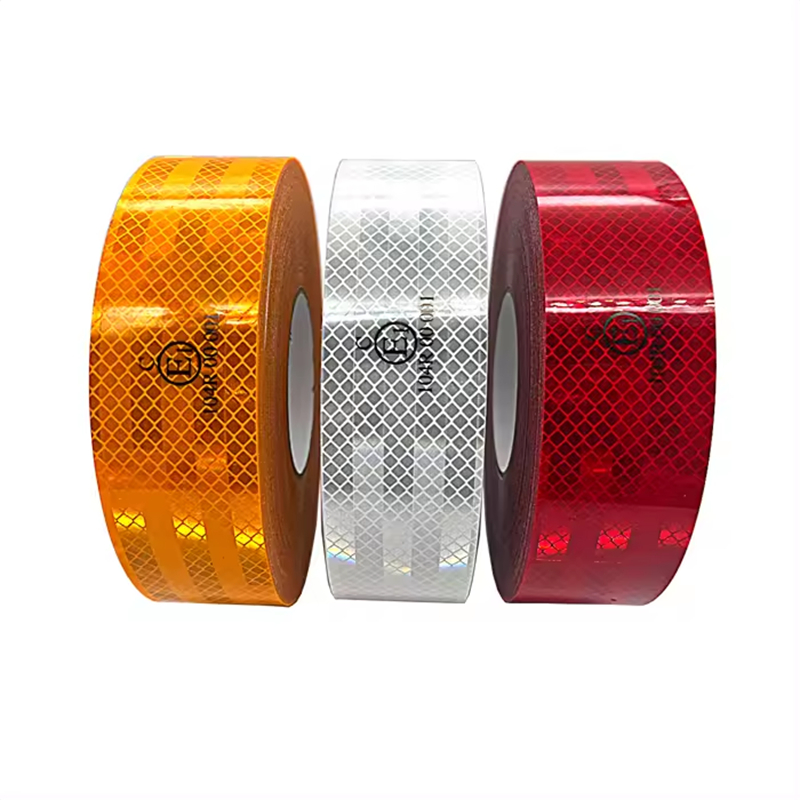
Reflective tape plays a crucial role in safety by making objects more visible and highlighting hazardous areas. Its unique design enables it to reflect light in a way that draws attention, providing an effective visual warning.
Due to its safety benefits, reflective tape is widely used across various industries and is a key tool for federal and state transportation agencies. Beyond industrial and governmental use, it also offers practical applications for personal safety.
Reflective tape is specially engineered to bounce light back to its source, making it highly visible even in low-light conditions. There are three main types of reflective tape, each designed for specific applications.
The reflective property of the tape comes from embedded prisms or glass beads within a film. These elements are highly efficient at reflecting light. It’s important to note that reflective tape differs from glow-in-the-dark tape, which absorbs and emits light rather than reflecting it.
Also referred to as retro-reflective tape, it functions by sending light back toward its origin. This creates a “lit-up” effect, making it easy for observers to notice.
The reflection is directed toward the light source, so individuals positioned away from the source may not see the same intensity of reflection. However, the light source can come from any direction. As long as a person has a light shining toward the tape, it will reflect and become visible, ensuring safety from multiple angles.

Reflective tape is available in three main grades, each designed for specific applications: Engineering, High-Intensity, and Diamond.
Engineering grade reflective tape features a pressure-sensitive adhesive and uses either glass beads or prismatic optical technology to achieve reflectivity.
It is commonly applied to traffic signs that are not critical to safety, such as parking signs. It is also suitable for reflective decals or stickers. This type of tape is compatible with digital printing, screen printing, and die-cutting, and can be either temporary or permanent, with a durability of up to seven years.
High-intensity reflective tape is made with a honeycomb prism surface, offering strong reflectivity both day and night.
It is ideal for applications where visibility is crucial for safety, such as traffic cones, barricades, and road markings. The tape includes a durable topcoat that extends its lifespan up to 10 years. Additionally, its manufacturing process generates fewer emissions and consumes less energy compared to engineering grade tape.
Diamond grade reflective tape incorporates cube prisms, providing superior brightness and reflectivity at all times of day.
In the U.S., this grade is commonly used for new traffic control signage, school zones, and other critical safety applications due to its exceptional visibility. It features a pressure-sensitive adhesive and is often mounted on aluminum sheets. Diamond grade tape is also compatible with screen printing for custom applications.
The primary purpose of reflective tape is to enhance the visibility of objects or surfaces, improving safety in a wide range of settings. While it is widely used in the transportation industry, its applications extend far beyond roads and vehicles.
Reflective tape is most commonly applied to improve road safety. It effectively alerts drivers to hazards without relying on electricity, making it a dependable tool for preventing accidents.
The U.S. Department of Transportation (DOT) mandates the use of reflective tape on certain commercial vehicles, particularly trailers. This ensures oversized vehicles are clearly visible to other drivers, helping prevent collisions. DOT regulations specify the colors, sizes, and exact placement of the tape on trailers.
State and federal transportation agencies, along with road construction companies, use reflective tape on traffic cones and barricades to enhance visibility. Clearly marked obstacles reduce the likelihood of accidents in construction zones.
Bicycles and motorcycles are small and often hard to see on the road. Applying reflective tape to these vehicles increases their visibility, making riders safer during both day and night.
· Construction and Hazard Zones: Construction sites are high-risk environments. Reflective tape can mark hazards such as drop-offs, low overheads, or restricted areas, alerting both workers and the public.
· Safety Gear and Clothing: Adding reflective tape to hard hats, clothing, or safety vests improves wearer visibility in dim conditions.
· Equipment and Machinery: Reflective tape can highlight dangerous machinery parts, edges, or floors, reducing the risk of workplace accidents. It is also effective on farm equipment to mark hazardous areas.
· Outdoor Activities and Sports: Reflective tape can be applied to gear, sports equipment, or outdoor items to enhance visibility and prevent loss. SOLAS-certified tape is especially useful for marine equipment such as life jackets and kayaks, increasing safety in emergencies.
· Pet Safety: Adding reflective tape to collars, harnesses, or leashes improves pet visibility during nighttime walks.
· Camping and Hiking: Reflective tape helps hikers and campers stay visible at night. It can also serve practical purposes such as repairing torn canvas or marking gear for easy identification.
Reflective tape is versatile, cost-effective, and easy to apply, making it an essential tool for improving visibility and safety across industries and daily life.
With numerous types of reflective tapes available, it’s important to understand the unique characteristics of each. Selecting the right tape ensures it performs effectively for your specific application.
When choosing reflective tape, pay attention to the following:
· Durability and Longevity: How well the tape withstands wear and tear over time.
· Reflectivity and Visibility: The tape’s ability to reflect light and remain noticeable in low-light conditions.
· Weather and UV Resistance: How resistant the tape is to outdoor elements, including sunlight and moisture.
· Adhesive Strength and Surface Compatibility: Ensuring the tape sticks securely to the intended surface without peeling.
Reflective tapes vary in durability depending on the materials and adhesives used. While some tapes can last up to 10 years, others may have a usable life as short as five years. Choosing a tape with appropriate longevity ensures reliable performance over time.
The primary purpose of reflective tape is to enhance visibility, but not all tapes perform equally. A tape’s candela rating indicates its brightness when reflecting light—higher candela values mean stronger reflectivity and improved visibility, especially in low-light conditions.
For outdoor applications, it’s crucial to consider how the tape withstands different weather conditions, including sun exposure, humidity, rain, and snow. Excessive moisture or sunlight can cause some tapes to fade, shrink, or peel. In certain cases, applying a sealant may be necessary to maintain the tape’s effectiveness in harsh environments.
Ideally, you want to choose tape with a high-tack permanent adhesive. More importantly, select one designed for the specific surface where it will be applied. Curved surfaces, for example, require special tape designs, and some tapes won’t stick to metal unless it has a painted surface.
When shopping for reflective tape, it’s important to understand how to evaluate its various features. Key considerations include:
· Reflectivity Standards
· Compliance with Safety Regulations
· Available Sizes and Colors
· Installation and Removal
· Maintenance and Cleaning
The reflectivity required depends on the application. For safety purposes, highly reflective tape is necessary. In other situations, such as marking sports equipment, the highest reflectivity grade may not be needed.
In some cases, using reflective tape must comply with legal regulations, particularly for vehicles. The Department of Transportation (DOT) has specific rules regarding tape application and the type of tape allowed on trailers and other vehicles. It’s essential to choose tape that meets these DOT requirements to ensure safety and compliance.
One of the main considerations when selecting reflective tape is the available sizes and colors.
· Sizes: Reflective tape widths can range from as thin as 0.5 inches to as wide as 30 inches, with some products offering options outside this range depending on the manufacturer.
· Colors: Many applications require specific colors:
White: Most common, highly reflective and bright
Yellow: Signals caution
Red: Indicates danger or stop
Orange: Emergency or work zone caution
Blue: Denotes caution
Green: Indicates a safe zone or permission to enter
Black: Less reflective, mainly for aesthetics
· Fluorescent: Provides excellent visibility both day and night, usually in yellow or orange, ideal for applications requiring high visibility at all times.
· Striped: Typically used for warnings. Common combinations include red and white for visibility or orange and white to indicate caution.
Carefully follow the installation and removal instructions for any reflective tape you purchase, as many products have specific guidelines. Some tapes must be applied at certain temperatures or on surfaces free of moisture. Additionally, certain tapes may require a set period before exposure to weather.
For removal, the most common method is using heat to loosen the adhesive. Be aware if a tape requires a special chemical for removal, as this could affect its suitability for your application.
Consider maintenance and cleaning requirements before purchasing. Ensure that the tape’s upkeep aligns with your capabilities. Some tapes need regular cleaning with a damp cloth, while others may only require dusting. Proper cleaning is essential for maintaining reflectivity, making this a critical factor in tape selection.
Reflective tape is a versatile tool for enhancing visibility and promoting safety in a wide range of applications. It is available in various types and colors to meet different needs—from SOLAS-certified tape for marine use to DOT-compliant tape that adheres to vehicle safety regulations.
At Top Tape, we offer a broad selection of reflective tapes, giving you options in size, color, and type to suit your specific requirements. Explore our products today to find the perfect solution for your application.